
Southeast Asia weather by month follows the monsoon, and the monsoon does not run on the same calendar everywhere. In broad terms, the mainland is driest from roughly November to March, while parts of Indonesia and the Philippines have their own patterns. This guide explains the logic and then walks through each major country.
Weather varies year to year, and climate zones within a single country can differ sharply. Use the patterns below to narrow your options, then check the national meteorological services before you book.
Monsoons explained simply

A monsoon is a seasonal shift in wind direction that brings either dry or wet air. In much of mainland Southeast Asia, a southwest monsoon arrives in the middle of the year and brings heavy rain. A northeast monsoon follows later and brings drier conditions to many areas, but heavy rain to others.
That second point causes most of the confusion. The same northeast wind that dries Bangkok can soak the east coast of Vietnam and the Philippines. Geography decides who gets rain. Mountains, coastlines and ocean currents all matter.
The wet season rarely means constant rain. In many places, it means a heavy shower in the afternoon, followed by clear skies. Some travelers prefer these months for the green landscapes and lower prices. Others avoid them because roads flood or boats stop running.
Temperature and humidity add another layer. The hottest weeks in much of the mainland come before the rains, around March to May. Mountain regions stay cooler year-round. For tropical storm risk, look at official forecasts as your trip date approaches.
Thailand and Cambodia
Thailand’s central, northern and Gulf areas are generally most comfortable between about November and February, when it is drier and less humid. From March to May the heat builds. The rainy season typically spans roughly May to October, with showers that can be intense in the afternoon.
The coasts differ. The Andaman side, which includes places such as Phuket and Krabi, gets its heaviest rain in the middle of the year, and seas can be rough. The Gulf islands such as Koh Samui have a different pattern, with their wetter months often arriving later in the year. That is why many travelers split a trip between the two coasts.
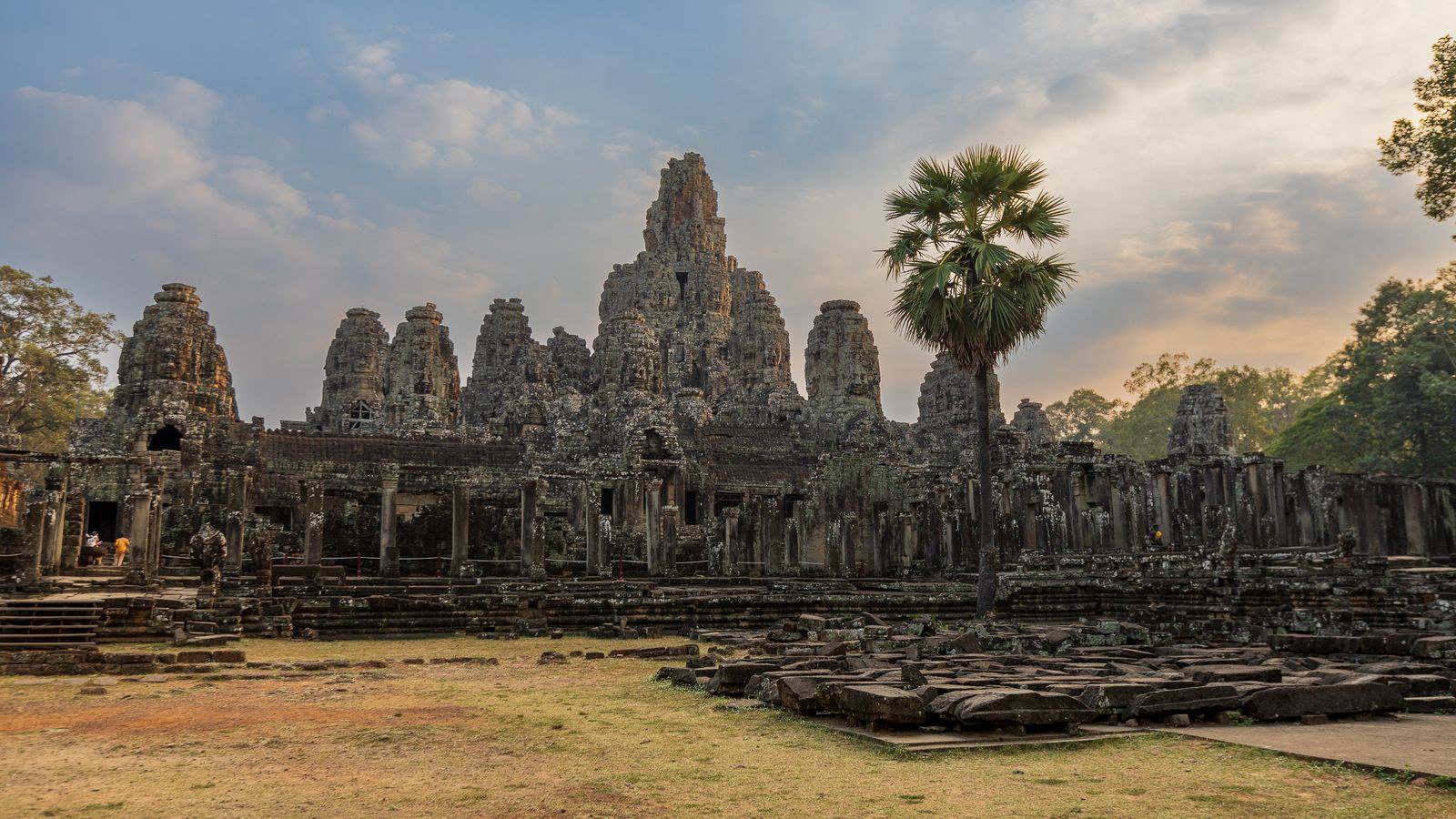
Cambodia follows a similar rhythm to central Thailand. The cooler, drier months suit temple visits in Siem Reap, where much of the walking is outdoors. The rainy season turns the countryside green and can reduce crowds, though some tracks become muddy. Pack a light rain layer and plan sightseeing for the morning.
The Thai Meteorological Department publishes forecasts and warnings, and is worth checking in the weeks before your trip.
Vietnam: three climates in one country
Vietnam is long and narrow, so the north, center and south each behave differently. That makes it a tricky country to plan by a single season.
The north has four distinct seasons. Winters can be cool and damp, especially in the hills, while summers are hot and humid with heavy rain. Many travelers like spring and autumn for Hanoi and the mountains.
The central coast, including Hue, Da Nang and Hoi An, has its main rains later in the year, often in autumn and early winter. Storms and flooding can disrupt travel in these months. The drier, sunnier spell usually comes in the first half of the year.
The south, around Ho Chi Minh City and the Mekong Delta, has a simpler pattern: a dry season and a wet season. The dry months are usually warm and sunny, while the wet months bring afternoon downpours.
If you are crossing the whole country, expect to pass through more than one weather pattern in a single trip. Our Vietnam north to south route guide shows how to link the regions in a sensible order.
Indonesia and Malaysia

These two countries straddle or sit close to the equator, so temperatures stay warm year-round. The difference lies in rainfall, which depends on region and coast.
In Indonesia, much of Java, Bali and the islands to the east have a dry season roughly from May to September and a wetter season later in the year. That is why Bali is so busy in the middle of the year. Sumatra and Kalimantan are wetter and less predictable. The national agency, BMKG, provides forecasts and warnings.
Malaysia is split by the South China Sea. The west coast, including Penang and Langkawi, and the east coast, including the Perhentian Islands, have different wet periods. The east coast receives heavy rain in the northeast monsoon, usually later in the year, and many island resorts close for several months. The west coast tends to be wetter during the intermonsoon periods.
Borneo, in both Malaysia and Indonesia, is rainy for much of the year, though some months are drier. If you want to trek or see wildlife, ask local operators what conditions to expect.
Because the details are so local, search for the exact town you plan to visit. A country-level summary can be misleading when islands and coasts have opposite seasons.
The Philippines
The Philippines has two broad seasons: a drier period, roughly from late in the year to the spring, and a wetter period during the middle months. The picture changes across the archipelago, because some regions get rain from the northeast monsoon while others do not.
Typhoons are the main concern. The country sits in a busy storm region, and the peak risk typically falls in the second half of the year. A storm can ground flights and ferries for days. If you travel in those months, buy flexible tickets, keep a buffer day, and review the national weather agency. PAGASA issues the official forecasts and warnings.
Island hopping works best in the drier months, when seas are calmer. The central Visayas and Palawan often have friendlier conditions earlier in the year than the northern islands. Because of the scattered geography, a trip across several islands may be affected by weather in one place only.
Southeast Asia weather by month: building a route that follows the dry season
The simplest approach is to start where the weather is best at your arrival date and move with the dry weather. Rather than visit everything in one go, choose two or three regions that share a good season.
For example, a trip in the first months of the year could pair mainland destinations such as Thailand, Cambodia and southern Vietnam. A trip in the middle of the year might lean toward Bali and the Indonesian islands to the east. Later in the year, central Thailand and the Gulf coast become attractive again. These are patterns, not guarantees.
Give yourself slack. Add a spare day before long ferry rides or flights home, and avoid booking nonrefundable transport in storm-prone months unless you need to. Also check the entry rules for every country on your list, since requirements differ and change. Official immigration sites and your own government’s travel advice are the safest sources.
If you are still deciding when to go, our guide to where to travel in every month of the year helps you compare regions beyond Southeast Asia.
Packing and health
One last practical point is packing. Warm and wet climates reward light, quick-drying clothes, a compact rain jacket and a dry bag for electronics. Sandals dry faster than shoes, and a small umbrella is more useful than it looks.
In the hottest weeks, plan your day around early mornings and late afternoons, and leave the middle for a long lunch and a rest. Hydration and sun protection matter just as much as the forecast.
Health advice also shifts with the season. Mosquito activity usually rises with the rains, so check current guidance from your national health agency before you go. Official sources are the right place for vaccination and medication advice, and a pharmacist or doctor can tailor it to you.
Weather will always keep some surprises. A route built around the broad seasons, with a little flexibility, will survive most of them. That is the real aim: not a perfect forecast, but a plan that bends without breaking.